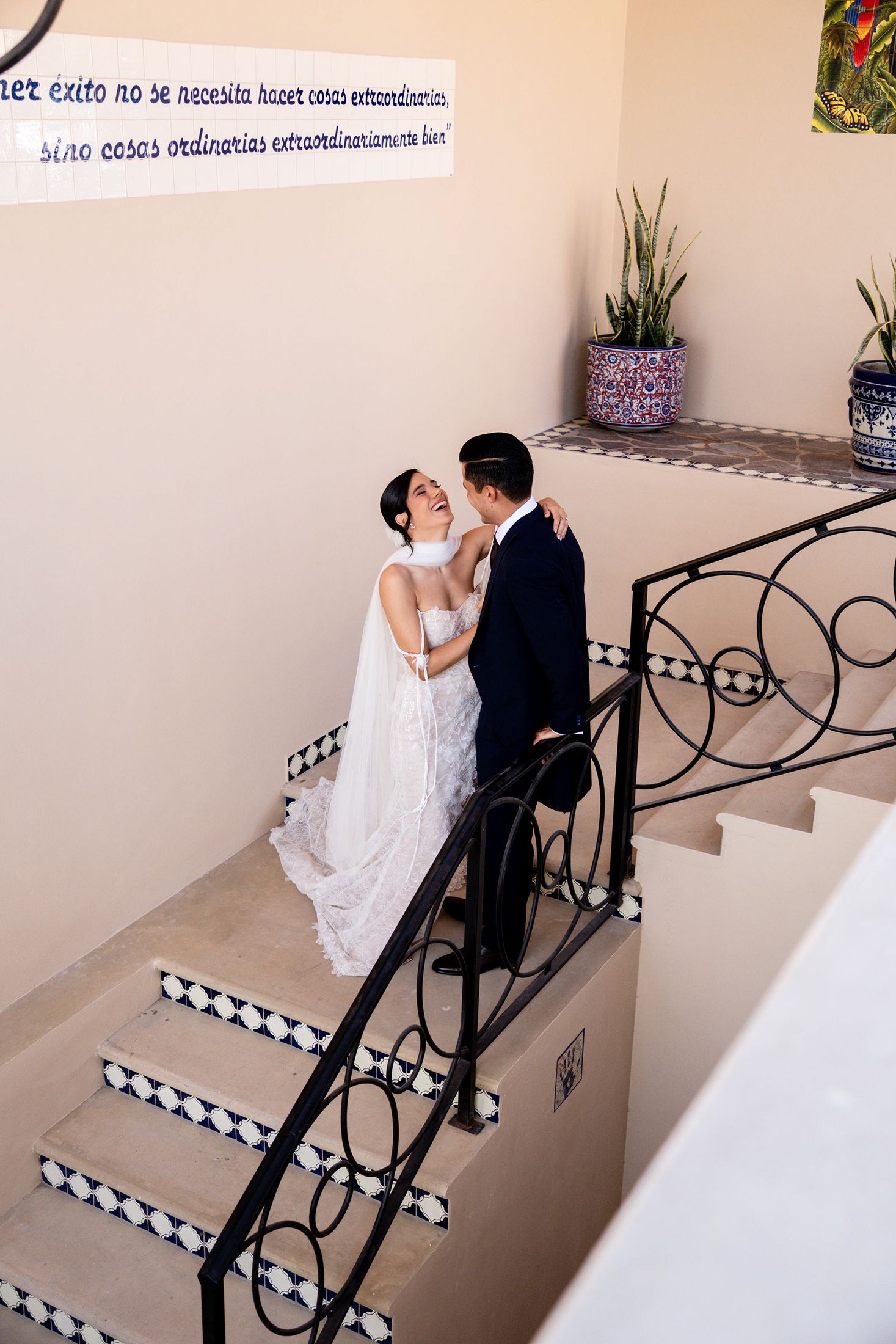
I've photographed over 200 weddings. I've watched couples make the same five mistakes again and again — and I've watched some of them spend years regretting it. None of these mistakes require experience to avoid. They just require knowing what they are before you sign anything.
Choosing based on price alone
The cheapest photographer at your price point is cheap for a reason. Either they're starting out and don't have the experience to handle a complex destination wedding, or they're experienced but cutting corners on equipment, editing, or time. In either case, you discover this after your wedding when you can't change it.
The right question isn't "what's the cheapest photographer who can cover my wedding?" It's "what's the least I can spend to get photos I'll genuinely love for 60 years?" Those are different questions with different answers.
What to do instead: Set a photography budget range, not a maximum. Then look for photographers in that range whose portfolios match what you actually want — not just technically competent, but emotionally resonant. If the photographer whose work you love is $400 more than your budget, consider what else in your wedding budget has a shorter shelf life than the photos.
Red flag: Any photographer who leads with price, who immediately discounts when asked, or who has no clear explanation of what drives their pricing. Professional photographers know exactly what their time and skill are worth.
Hiring someone who has never photographed in Mexico
Hiring a photographer who has never worked in Mexico is the most consequential mistake on this list, and the one most specific to destination weddings. Light here behaves differently, and Mexican venues run on vendor relationships and cultural logistics an outside photographer has to learn on the wedding day itself.
Light in Mexico is different from light in the US. Midday light in Jalisco in October can be brutal — flat, harsh, and unflattering unless you know how to work with it. Golden hour in the Lake Chapala region happens at a specific angle and lasts about 40 minutes. A hacienda in Jalisco has specific zones where the light pools beautifully and specific zones that are always in unflattering shadow. A photographer who has never been there doesn't know any of this until they're standing on your wedding day, discovering it in real time.
Mexican venues also have specific vendor relationships and cultural logistics that an outside photographer has to learn on the fly. The hacienda coordinator who sees an unfamiliar photographer will give a local photographer different access than an outsider — not out of hostility, but out of natural trust.
What to do instead: Ask every photographer you're considering how many weddings they've photographed in your specific region of Mexico. Not Mexico in general — your specific destination. A photographer who has photographed 30 weddings at haciendas in Jalisco is a fundamentally different vendor than one who photographed a resort wedding in Cancun once in 2019.
Booking photography last
Most couples book venue first, then planner, then caterer, then music. Photography is usually fifth or sixth on the list — and by then, the photographers they actually wanted are booked.
The best local photographers in any destination region in Mexico — the ones with the portfolios that made couples stop and say "that's what I want" — are typically booked 10–14 months in advance for wedding season dates. If you're starting the photography search at 6 months out, you're looking at whoever's left.
What to do instead: Book venue and photographer at the same time. They're both irreplaceable, both dependent on date availability, and both significantly harder to find last-minute than caterers or florists. The day you sign your venue contract is the day you should be calling photographers.
The math: Wedding season in Mexico (November through April) has roughly 24 Saturdays. The best photographers in each region can only photograph one wedding per weekend. That's 24 spots per year, total. With 2–3 top photographers per destination, there are roughly 50–70 ideal slots per region per season. Those fill fast.
Not building a photography timeline before the wedding day
The wedding-day photography timeline is not something you figure out on the day. By the time you're in hair and makeup, it's too late to discover that you allocated 20 minutes for family portraits when you need 45, or that you scheduled the first look at 2pm when the light is at its absolute worst.
A photography timeline answers: When does getting-ready coverage start? Where is the first look happening and at what time? How long are family portraits? When is the ceremony? What's the sunset window and how do we use it? When does reception coverage start and end?
Every destination wedding has a "golden hour" — the 30–60 minutes before sunset when the light is warm, soft, and magical. Your timeline should be built backward from that window. Everything else adjusts to protect it.
What to do instead: Three months before the wedding, ask your photographer to build the wedding-day timeline with you. A good photographer will already do this — it's part of their service. If they don't offer it, ask for it explicitly. The resulting document tells every vendor exactly when to arrive and what the day's sequence is.
Assuming all wedding photographers are equivalent
Treating all wedding photographers as equivalent is the most widespread misconception in wedding photography. Couples look at two photographers, see that both can produce technically correct, properly exposed images, and assume they're interchangeable. They're not.
The difference between adequate wedding photography and excellent wedding photography is not technical — it's editorial judgment. It's knowing when to shoot and when to wait. It's understanding that the moment before the hug is more powerful than the hug itself. It's being positioned in the right place before the moment happens, because you've photographed enough weddings to know what's coming.
Two photographers can stand in the same room for 8 hours and return entirely different galleries. One returns images that document what happened. The other returns images that make you feel what it was like to be there — images that stop people in their tracks when they see them.
That difference is invisible on paper. It's only visible in the work. Which is why the most important thing you do when choosing a photographer is look at full wedding galleries, not curated portfolios. A portfolio shows 20 best shots. A full gallery of 400 images shows you who a photographer really is.