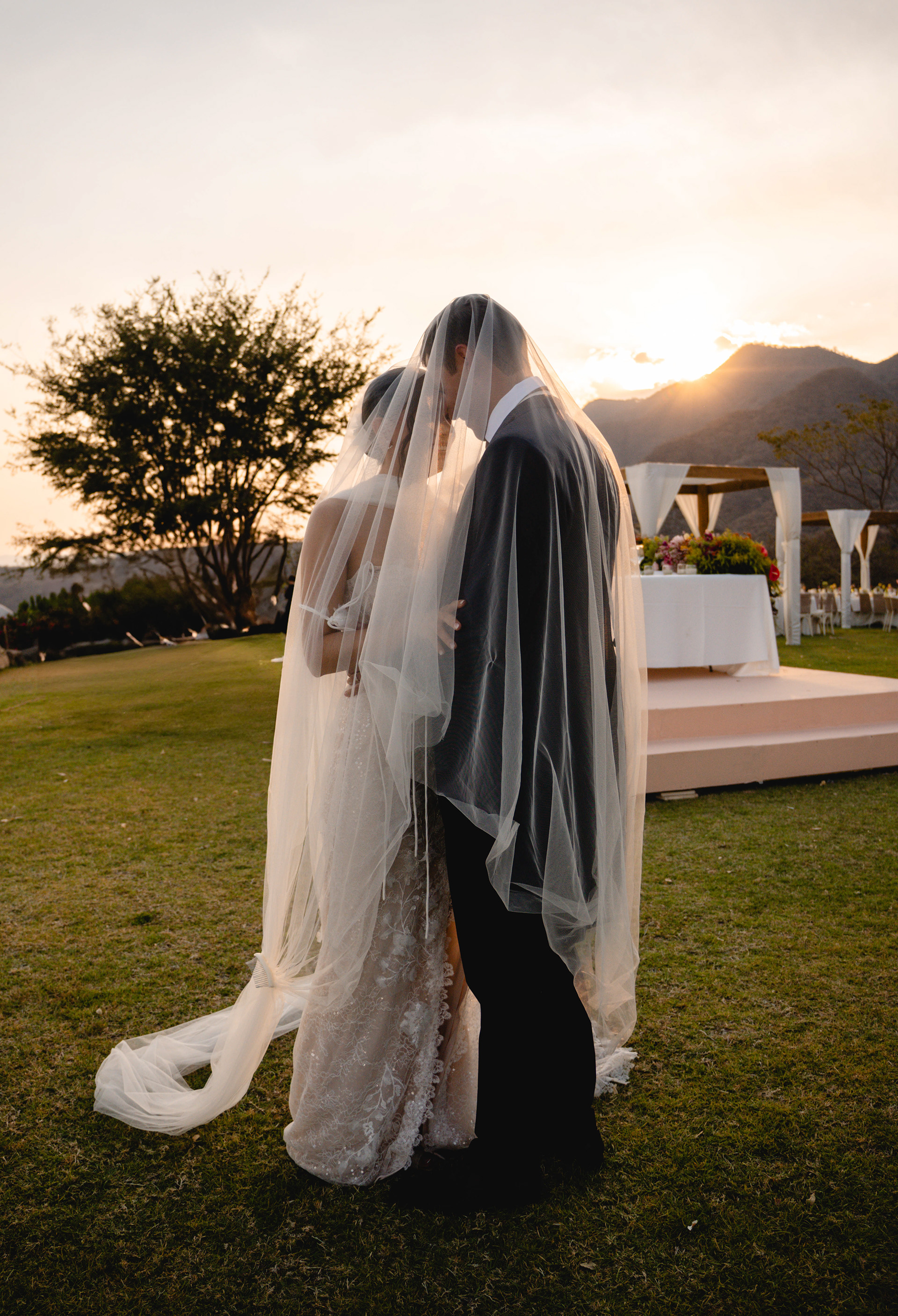
Yes — a wedding legally performed in Mexico is fully recognized in the United States, as long as it's done through Mexico's Civil Registry and the resulting marriage certificate is apostilled and translated. Most of the couples we photograph across Jalisco, Puerto Vallarta, and San Miguel de Allende skip that process entirely, though — they marry legally at a courthouse back home and treat their Mexico wedding as the ceremony that actually matters.
This article is general information, not legal advice — confirm specifics with the Registro Civil in your wedding's jurisdiction or a licensed attorney.
Civil vs. symbolic — the distinction that confuses everyone
Almost every question about legal recognition comes down to this one distinction. In Mexico, only a ceremony performed by an official Civil Registry (Registro Civil) officer creates a legal marriage.1 A religious ceremony, a beach ceremony with an officiant, a hacienda ceremony with your own vows — none of that is legally binding on its own, no matter how official it feels on the day.
That's not a flaw in the system. It's actually why so many couples marrying in Jalisco, Riviera Nayarit, San Miguel de Allende, or Los Cabos choose a symbolic ceremony on purpose: it separates the legal paperwork from the day you're actually planning, which opens up your choice of officiant, venue, and timeline completely.
Path 1: Legally marry in Mexico
If you want the legal ceremony and the celebration to be the same event, you marry through the Civil Registry directly. Here's what's generally required:
Documents & requirements
- Valid passports for both partners, plus a tourist permit (standard for most US visitors)
- Certified birth certificates, officially translated into Spanish and carrying an apostille
- A physician's certificate based on blood tests taken in Mexico, confirming no contagious disease
- Two witnesses, each over 18 years old, present at the ceremony
- Arrival at least 4 full business days before the ceremony (arrival day, weekends, and Mexican holidays don't count)1
Once the marriage is registered, apostilling and translating the Mexican marriage certificate makes it fully recognized back in the United States.1 This applies wherever you marry — the federal requirements are the same in Jalisco, Puerto Vallarta/Riviera Nayarit, and San Miguel de Allende; only the local Registro Civil's exact scheduling process varies by state.
Path 2: Marry legally at home, celebrate in Mexico
Many couples skip the above entirely. They get legally married — often quietly, at a courthouse — in the US before or after their trip, then hold their "real" wedding ceremony in Mexico as the celebration everyone actually experiences. No Registro Civil, no apostille, no blood test requirement, no 4-day arrival window.
Why couples choose this path: it removes every piece of Mexican bureaucracy from your wedding week, lets you set your own timeline for guest arrivals, and your officiant in Mexico — religious or symbolic — can run the ceremony exactly the way you pictured it, without needing Registro Civil credentials.
The most common mistake we see on real wedding days
The mistake we watch couples make isn't picking the wrong path — it's not picking one at all. Couples book a beautiful symbolic ceremony in Mexico, assume that's what makes the marriage official, and only discover months later — usually when it's time to change a name or file paperwork — that no legal marriage exists anywhere. Fixing that after the fact is far more stressful than deciding on your path before you book anything.
If any of this sounds like your situation already, we wrote a full breakdown on exactly this question: is a symbolic wedding in Mexico legally binding?
Which path is right for you?
| If you want... | Choose |
|---|---|
| The legal ceremony and the celebration to be the same event | Path 1 — Mexican civil registry |
| Maximum flexibility on timeline and officiant | Path 2 — courthouse first |
| To avoid blood tests and a 4-day arrival window | Path 2 — courthouse first |
| A Catholic or religious ceremony recognized by your church | Either — coordinate separately with your parish or officiant |
We walk every couple through both paths on their planning call before any deposit is due — see how that fits into the process for each destination on our collections & pricing page.
If you're going the courthouse-first route, make sure every guest also has the right travel documents to enter Mexico, and budget for both ceremonies — see our full cost breakdown.
Want the guide with the full 12-month timeline, the zones, and everything else to know before you plan — free, no call required?
Get the Free Planning Guide →Sources
- U.S. Embassy & Consulates in Mexico, Marriage, accessed July 2026.
- Paradise Weddings, How to Legally Get Married in Mexico, 2026.