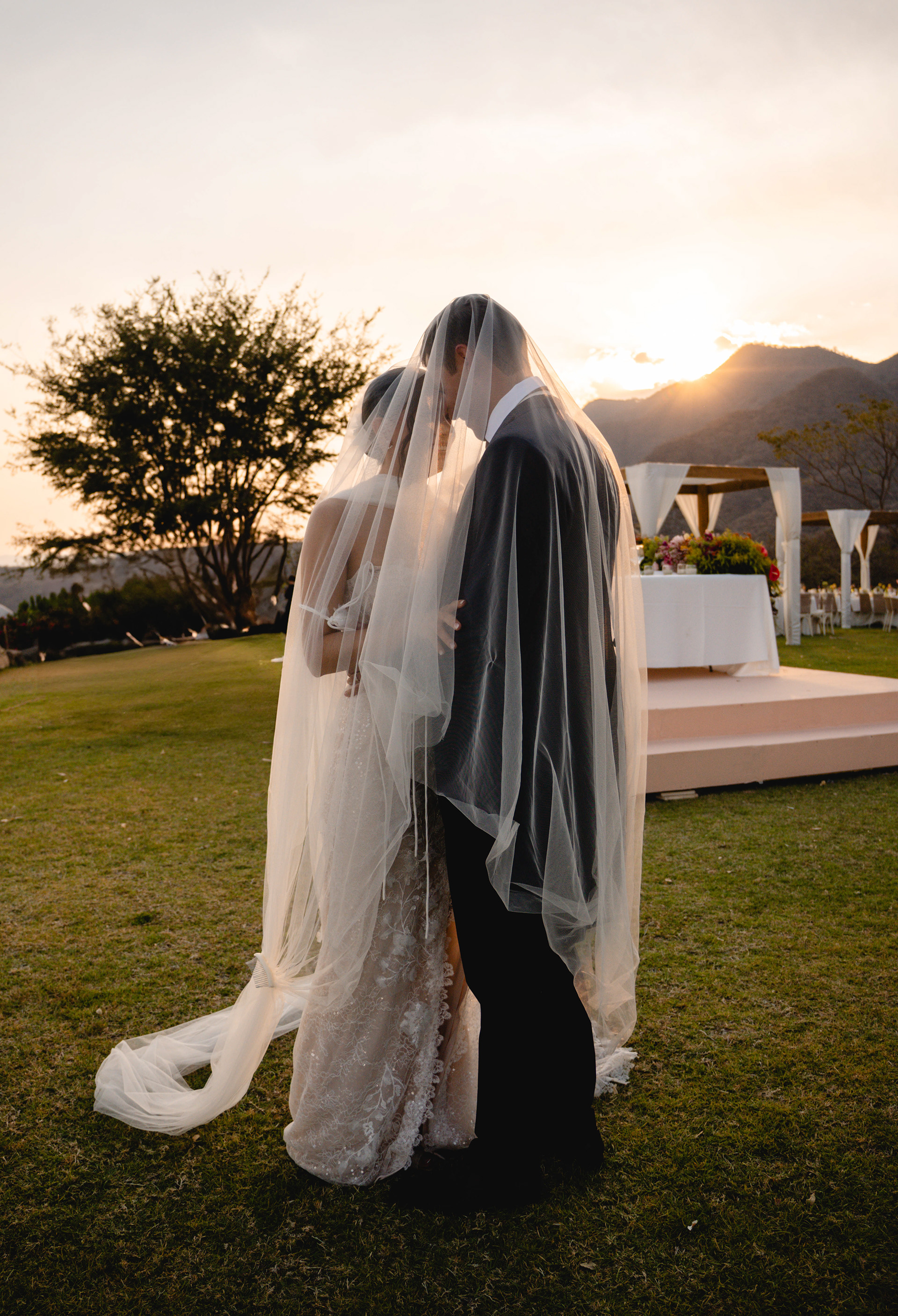
In Guadalajara the sun sets between about 6:13 pm in November and 7:37 pm in July, and the clock never changes because Jalisco stays on UTC−6 all year. For golden-hour portraits, start the ceremony roughly 60 to 90 minutes before sunset: about 4:45 pm from November to January, and about 6:15 pm from May to August.
Sunrise, sunset and golden hour by month
Guadalajara’s sunset moves only about 85 minutes across the whole year, from 6:13 pm in mid-November to 7:37 pm in mid-July. Golden hour, the warm low light that photographers plan around, starts roughly an hour before sunset, and civil twilight (the blue-hour glow) ends about 24 minutes after it.
| Month (15th) | Sunrise | Golden hour starts | Sunset | Twilight ends |
|---|---|---|---|---|
| January | 7:32 am | 5:32 pm | 6:32 pm | 6:56 pm |
| February | 7:24 am | 5:52 pm | 6:52 pm | 7:14 pm |
| March | 7:03 am | 6:03 pm | 7:03 pm | 7:25 pm |
| April | 6:36 am | 6:12 pm | 7:12 pm | 7:34 pm |
| May | 6:16 am | 6:23 pm | 7:23 pm | 7:46 pm |
| June | 6:12 am | 6:35 pm | 7:35 pm | 7:59 pm |
| July | 6:21 am | 6:37 pm | 7:37 pm | 8:02 pm |
| August | 6:32 am | 6:24 pm | 7:24 pm | 7:47 pm |
| September | 6:40 am | 5:57 pm | 6:57 pm | 7:19 pm |
| October | 6:48 am | 5:30 pm | 6:30 pm | 6:52 pm |
| November | 7:03 am | 5:13 pm | 6:13 pm | 6:37 pm |
| December | 7:22 am | 5:15 pm | 6:15 pm | 6:39 pm |
Values shift by a minute or two between years and by a few minutes within a month. The 15th is a reliable midpoint; ask your photographer to check the exact date once you have it.
Why the clock never changes in Jalisco
Jalisco stays on Central Standard Time (UTC−6) all year, because Mexico abolished daylight saving time for most of the country in October 2022. The United States still changes its clocks, so during US daylight saving time Jalisco is one hour behind Chicago and Dallas and on the same time as Denver, while in winter it matches Chicago and Dallas. Tell guests which clock the invitation uses.
When to start the ceremony
Start the ceremony 60 to 90 minutes before sunset if you want the couple’s portraits in golden hour. That is about 5:00 pm in winter and about 6:15 pm in summer. A ceremony that starts at sunset leaves you with 25 minutes of useful light for portraits, and everything after is flash or a lit venue.
| Season | Ceremony start | What you get |
|---|---|---|
| Nov–Jan | 4:30–5:00 pm | Portraits at 5:15–6:15 pm, right before a 6:15–6:30 pm sunset. |
| Feb–Apr | 5:30–6:00 pm | Golden hour portraits between 6:15 and 7:15 pm. |
| May–Aug | 6:00–6:30 pm | Late light, but afternoon rain can force an earlier plan B. |
| Sep–Oct | 5:00–5:30 pm | Sunset moves quickly; leave a margin for a late start. |
What the seasons do to your light
Jalisco has a dry season from roughly November to May and a rainy season from about June to October. In the dry season the sky is reliably clear and golden hour is predictable. In the rainy season storms usually build in the afternoon, so an earlier ceremony may avoid them, even if sunset is later. The weather plan is covered in the rain backup plan.
- Winter: sunsets are early and nights are cool; plan outdoor dinners with heaters or wraps.
- Spring: the warmest months, with the longest stretch of clear evenings before the rains.
- Summer and early fall: beautiful clouds, but a real chance of an afternoon storm.
How to build the timeline backward from sunset
Build the evening backward from sunset: set the sunset time, subtract 60 to 90 minutes for the couple’s golden-hour portraits, subtract another 30 to 45 for the ceremony and family photos, and you have the latest sensible ceremony start. Work the earlier hours, including getting ready, from that single anchor. The hour-by-hour method is in the destination wedding photography timeline.
If your venue is outdoors and your date is within the rainy season, also read daytime versus evening wedding photo and video before you commit to a start time.