The Mexican wedding traditions couples most often add are the arras (13 coins), the lazo (a cord or rosary draped around the couple), padrinos who sponsor each ritual, a callejoneada street parade with a mariachi, and la hora loca, a costumed dance break late at night. None is legally required, and you can include one, all of them, or none.
Which traditions are worth including
Include a tradition when someone in your family would recognize it, or when you want the day to feel unmistakably Mexican. A tradition added only because it looks good online tends to feel like a costume. A short list that means something to you beats a long list that nobody can explain to your guests.
Most traditions fall into two groups: religious rituals inside the ceremony, and celebration customs that move the party outdoors or onto the dance floor. They need different planning, and different photography.
Ceremony rituals: arras, lazo and padrinos
The arras are 13 coins, usually gold-colored, presented in a small box or pouch. Sources describe them as a symbol that the groom will support his new family, and the number 13 is often explained as Jesus and the 12 apostles. Many couples today reframe the gesture as a shared commitment, with both partners exchanging the coins.
The lazo is a large cord or rosary shaped like a figure eight and placed over the shoulders of the couple during the Mass. It stays on until the end of the ceremony as a symbol of unity, and couples often keep it afterward. Both rituals are usually handled by padrinos and madrinas, sponsors chosen by the couple, who traditionally also give gifts such as kneeling pillows, a rosary or a prayer book.
Check with the parish first. Which rituals fit, and where they happen in the Mass, depends on the priest and the church. In a civil or symbolic ceremony you can adapt the same gestures freely.
Celebration traditions: callejoneada, mariachi and la hora loca
A callejoneada is a street procession after the ceremony, led by a mariachi or a band and often by giant puppets called mojigangas. It is especially associated with colonial cities such as San Miguel de Allende and Guanajuato. In Jalisco, towns like Tequila and Tlaquepaque lend themselves to the same idea, subject to local permits and street closures.
Mariachi is the music most guests expect from a Mexican wedding. The ensemble may serenade the couple the night before, play during the ceremony or entrance, or take over the cocktail hour. A mariachi born in the state of Jalisco is a point of regional pride, which is a good reason to book one locally.
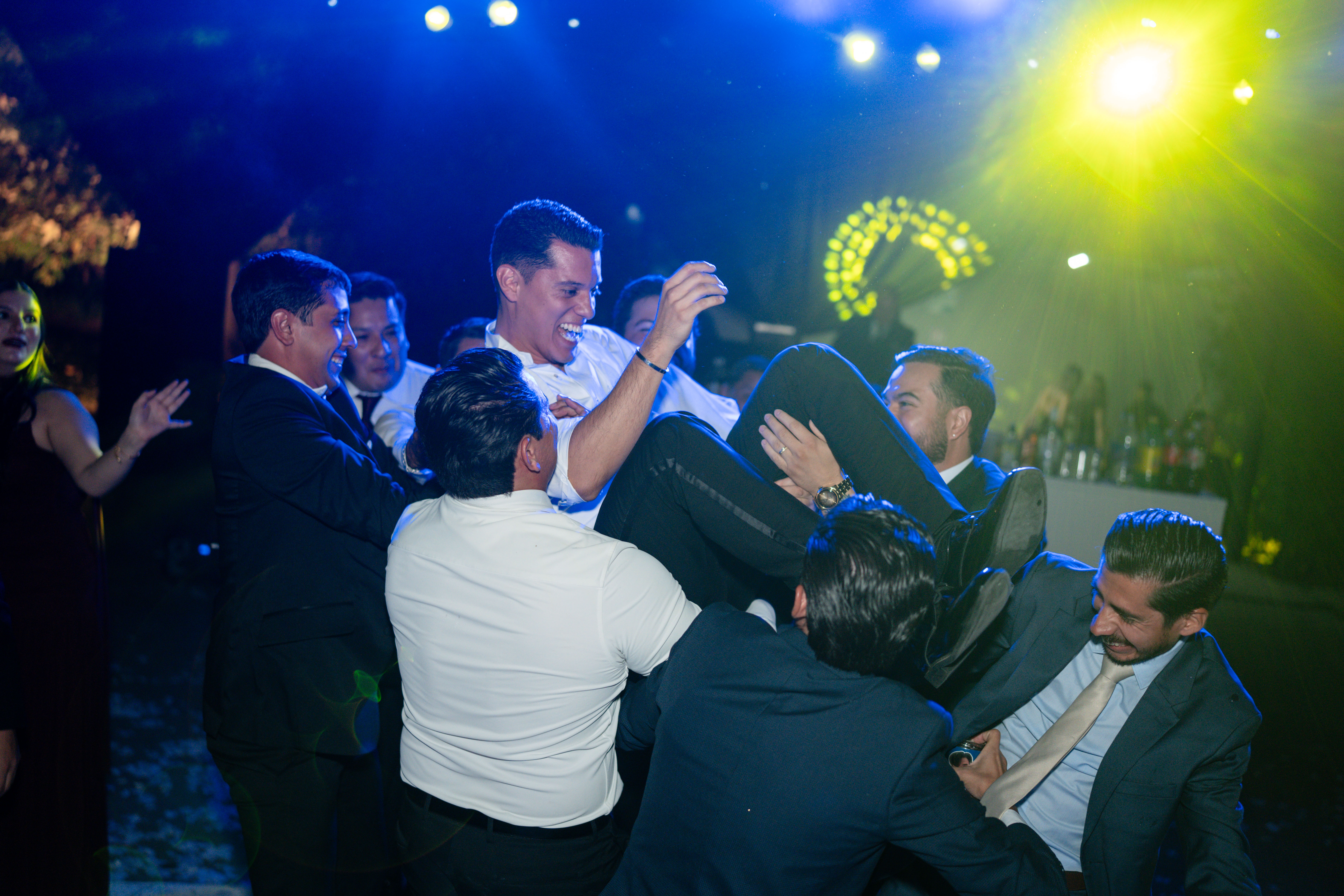
La hora loca (literally "the crazy hour") is a late-night block of costumes, lights, foam or confetti, dancers and props such as sunglasses and sombreros. It is widely popular in Mexican receptions, though sources describe it as a Latin American custom rather than a uniquely Mexican one.
All of them side by side
| Tradition | What it is | When it happens | Photo and video note |
|---|---|---|---|
| Arras | 13 coins presented to the couple. | During the ceremony. | Close detail of the coins, then the exchange. |
| Lazo | Cord or rosary placed around the couple. | During the ceremony. | Needs a clear view from the side aisle. |
| Padrinos and madrinas | Sponsors who present each ritual. | Ceremony and reception. | Give your photographer the names and roles. |
| Callejoneada | Street parade with music and puppets. | After the ceremony. | Needs a lead photographer in front of the crowd. |
| Mariachi serenade | Live music for the couple. | Night before, cocktail hour or entrance. | Fast, low light; plan the position early. |
| La hora loca | Costumed dance break. | Late at night. | Flash, motion and confetti; keep the team on. |
How to make sure each one gets photographed
Traditions go wrong on camera for one reason: the team does not know they are happening. Put each one in the timeline with a start time and a place, and give your photographer the family names involved. A callejoneada that nobody mentioned will already be a block away before anyone reaches for a camera.
- List every ritual in the written timeline, with the order and the people involved.
- Walk the route in advance for any procession, including where it starts and ends.
- Keep the coverage window long enough to reach la hora loca; it often happens in the last two hours of the party.
- Ask for a family list so padrinos are photographed with the couple, not just in the background.
The full hour-by-hour structure is in the destination wedding photography timeline.
How to mix them with your own style
A couple from the US can adopt two or three traditions and keep the rest of the wedding exactly as they imagined it. A common pattern is a mariachi at the cocktail hour, a short callejoneada from the ceremony to the reception, and la hora loca as the last act. If your family does not share the language, a bilingual photographer and coordinator make it easier to explain each moment to guests, as covered in why a bilingual photographer matters.