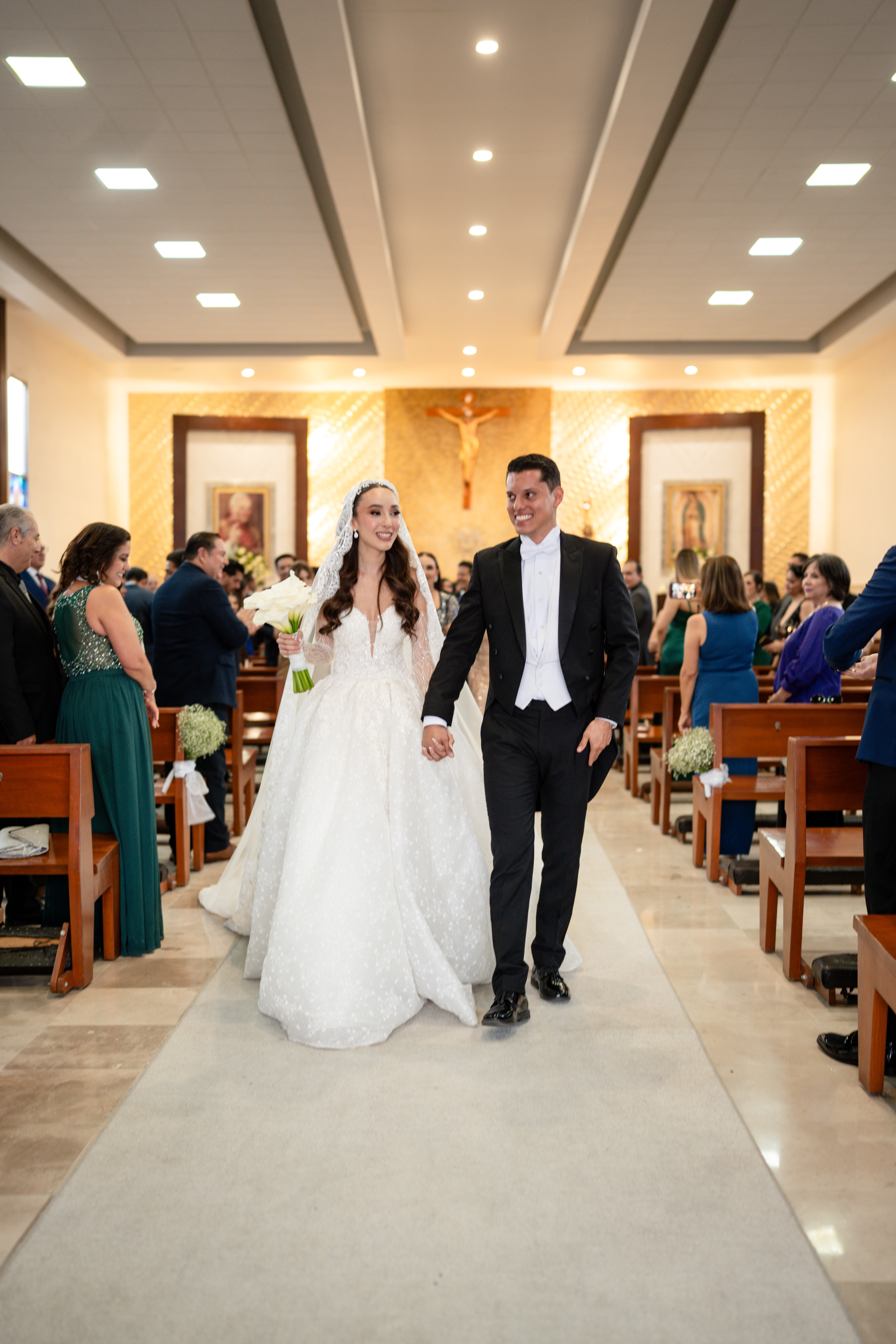
A Catholic wedding in Mexico is usually a nuptial Mass of about 45 to 90 minutes, or a shorter rite without Mass of about 25 to 40 minutes when one partner is not Catholic. The civil marriage is a separate legal step. Photo rules vary by parish, so ask the priest about flash, standing positions and the sanctuary before you book coverage.
Mass or rite without Mass
A Catholic wedding can be a nuptial Mass or a rite of marriage without Mass. A Mass typically runs 45 to 90 minutes, depending on the readings, music and the number of guests receiving Communion. A rite without Mass is shorter, around 25 to 40 minutes, and is common when one partner is not Catholic.
| Format | Typical length | Best for | Photo note |
|---|---|---|---|
| Nuptial Mass | 45–90 minutes | Two Catholic partners. | More stages, and Communion is the quiet moment to avoid shooting. |
| Rite without Mass | 25–40 minutes | One partner is not Catholic. | Shorter; fewer pauses. |
| Symbolic ceremony | 15–30 minutes | Couples without a church requirement. | See the symbolic ceremony guide. |
The order of the ceremony
The order is predictable: entrance procession, readings and homily, the questions before consent, the exchange of consent, the blessing and exchange of rings, then (in a Mass) the Eucharist and the final blessing. The consent, a spoken “yes” to the priest’s questions, is the central moment; sources describe it as coming after the questions and before the rings.
- Entrance procession with the couple and the wedding party.
- Readings and homily, often in Spanish with the option of a bilingual reading.
- Questions and consent, where the couple answers the priest.
- Blessing and exchange of rings, with arras and lazo where the family uses them.
- Eucharist and blessing if it is a Mass.
Traditions such as the 13 arras coins and the lazo cord are explained in Mexican wedding traditions to include.
The paperwork to ask about
In Mexico the civil marriage is generally a separate legal step, and the church wedding is a religious one. Parishes usually ask for baptism and confirmation records, a pre-marriage course, and sometimes extra documents when one partner lives abroad. Ask the parish office for its current list and its lead time as early as possible.
The legal side, including the civil registry and the paperwork for foreigners, is in the legal requirements for a wedding in Mexico.
Photo and video rules
Every parish sets its own photography rules, and some are strict about movement, flash and where photographers can stand. Common limits include no entry to the sanctuary during the liturgy, flash only during the procession and recessional, and no added lighting. Many parishes ask the photographer to meet the priest before the wedding to go over the ground rules.
- Ask about flash and available light before the date.
- Ask where the photographer and videographer may stand during the vows.
- Ask about audio: whether the priest accepts a microphone clipped on or placed near the altar.
- Ask whether guests may use phones, and consider an unplugged ceremony.
What guests will notice
Guests will notice that the ceremony is in Spanish, that the family has roles such as padrinos, and that the wedding party walks in as a group. Provide a short bilingual program so non-Spanish speakers can follow along, and tell the priest if some readings can be in English. A bilingual photographer or coordinator also helps with that, as covered in why a bilingual photographer matters.
How to plan coverage around a church
Plan the church wedding as a block: getting ready, travel, the ceremony, the exit and the portraits. Destination-wedding photographers who cover Mexican church weddings often recommend booking about six hours of coverage for a church ceremony, because the travel and the exit portraits add up. If the church is off the venue property, count the drive in the timeline.
The full hour-by-hour structure is in the destination wedding photography timeline.